Apple has launched a new Apple TV 4K with an A19 chip, upgraded Siri AI, and built-in microphones that let users control their streaming device without picking up the remote. Priced at $299, the new model adds smarter content discovery, improved home audio options, and a redesigned Siri Remote, with availability starting November 13, 2026.
I checked your article: Apple HomeView vs. Amazon Echo Show . It already mentions Amazon and Google smart displays, so you can add these outbound links to support the comparison with official product information.
What Is New in the Apple TV 4K?
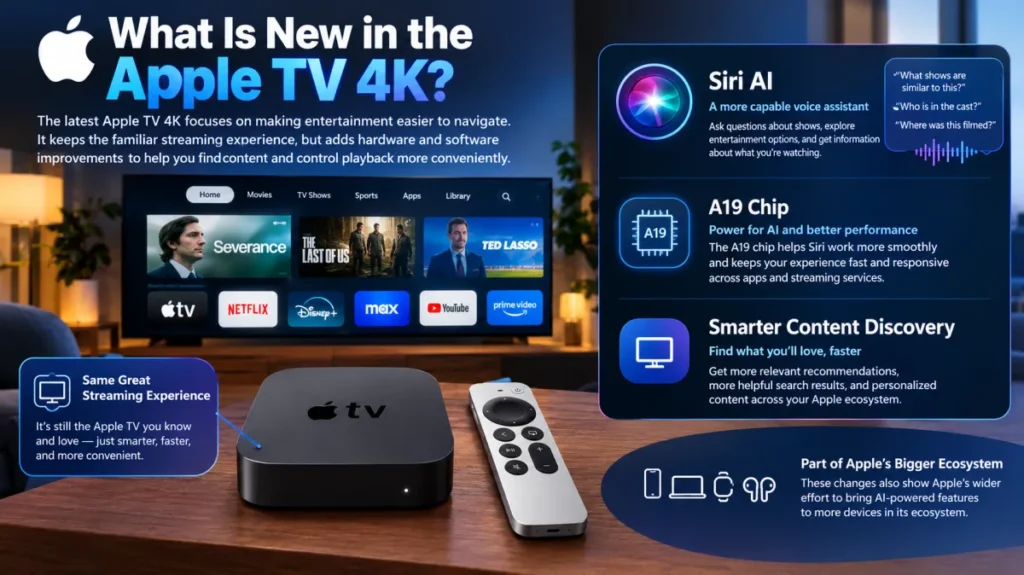
The latest Apple TV 4K focuses on making entertainment easier to navigate. Rather than introducing an entirely different viewing experience, Apple has updated its existing streaming box with hardware and software improvements designed to make finding content and controlling playback more convenient.
The biggest change is the addition of Siri AI. With a more capable voice assistant, users can ask questions about television shows, explore entertainment options, and get information related to what they are watching.
These changes also reflect Apple’s wider effort to bring AI-powered features to more devices in its ecosystem. Readers can learn more about Apple’s streaming hardware on the official Apple TV 4K website.
A19 Chip Brings AI Features to Apple TV
The new Apple TV 4K runs on Apple’s A19 chip, which supports its updated performance and AI capabilities. The processor provides the foundation for more advanced Siri interactions and a smoother experience when navigating apps and streaming services.
For everyday users, the important question is how these improvements affect regular viewing. Faster processing can help with navigation and responsiveness, while AI features may make searching for specific shows or information less frustrating.
However, the actual experience will depend on how well Siri understands requests and how consistently supported apps provide relevant results.
Siri AI Allows Hands-Free Voice Commands
One of the most noticeable additions is the three far-field microphones built into the streaming device. These microphones allow users to speak to Siri directly without holding the remote or connecting a HomePod for voice input.
For example, viewers can ask questions about a show’s cast, look for particular entertainment content, or request information about a program. Apple has demonstrated questions such as where a show was filmed and which shows received major television awards.
This approach could make searching more natural, particularly when users do not remember a movie’s exact title.
The updated Siri experience also aims to provide more personalized content discovery across Apple’s platforms. Still, its usefulness will depend on supported features, available information, and how accurately it responds to different questions.
New Siri Remote Can Help You Find It
Apple has also updated the Siri Remote with a built-in speaker. This addresses a familiar problem for people who regularly misplace their remote between sofa cushions or leave it in another room.
Instead of relying only on on-screen directions, users can make the remote produce a sound to help locate it.
The remote also supports Apple’s Find My features, making it easier to track a misplaced accessory using compatible Apple devices. Certain precision-finding capabilities depend on having a supported iPhone, so the full experience may vary between users.
These are practical changes rather than dramatic design updates, but they could make everyday use less inconvenient. For more details, check out our guide to TechCrunch Disrupt 2026, covering investor opportunities, startup pitches, networking, and key event highlights.
Improved Surround Sound With HomePod Speakers
Audio is another area receiving attention. The new Apple TV 4K supports a surround-sound setup using up to four compatible HomePod speakers, including HomePod mini 2 and second-generation HomePod models.
This gives users another option for building a home entertainment system without purchasing a traditional receiver and multiple separate speakers.
The setup is particularly relevant for people who already use Apple speakers around their homes. However, creating a compatible multi-speaker arrangement requires supported hardware, so existing speaker owners should check compatibility before making plans.
The overall audio experience will also depend on the room, speaker placement, and the content being played.

Apple TV 4K Price and Release Date
Apple has announced a price of $299 for the new Apple TV 4K. Preorders opened on October 13, 2026, and the device is scheduled to become available on November 13, 2026.
That price places it in the premium streaming-device category. Buyers should consider whether the updated Siri features, hardware improvements, and audio options justify the cost compared with their existing streaming equipment.
People who mainly watch streaming services and do not need advanced voice controls may find fewer reasons to upgrade immediately. Existing Apple users, on the other hand, may find the additional integration more useful.
Is the New Apple TV 4K Worth Buying?
The new Apple TV 4K looks most relevant to people who want hands-free voice control, more flexible audio options, and improved ways to discover entertainment.
Its built-in microphones remove the need to reach for a remote whenever a voice command is needed, while the updated Siri experience could make searches more conversational. The redesigned remote also addresses a small but common annoyance.
However, buyers should not judge the device on AI features alone. The value will depend on Siri’s real-world accuracy, compatibility with existing accessories, and whether the improvements solve problems they actually experience.
For owners of an older Apple TV, the upgrade may be worth considering if hands-free controls and improved audio are priorities. Those with a relatively recent streaming device may prefer to wait for more hands-on reviews.
Final Thoughts
Apple’s new Apple TV 4K combines an A19 chip, Siri AI, hands-free voice commands, and a redesigned remote in a $299 streaming device. Its most meaningful changes focus on everyday convenience rather than a completely new approach to television.
The device’s long-term appeal will depend on how reliably its AI features work and whether users find them useful beyond occasional voice searches. For households already invested in Apple’s ecosystem, it offers another way to connect entertainment and smart-home technology in one place.