Apple HomeView could become Apple’s biggest step toward making smart homes easier to manage, but its success will depend on useful features, reliable Siri performance, and how well it competes with Amazon and Google. The $299 smart home hub combines a touchscreen, voice assistance, and connected-home controls in one device.
What Is Apple HomeView?
Apple HomeView is a smart home hub designed to bring everyday household tasks and connected devices together in one place. Apple unveiled the device on October 13, 2026, following earlier reports about its development.
Unlike a traditional smart speaker, HomeView includes a display that allows users to interact with apps, check information, and manage compatible smart home accessories. Its design combines features associated with the HomePod with a screen for visual information.
The device is available in two designs: one for a countertop and another intended for wall mounting. This flexibility could make it useful in shared spaces such as kitchens, living rooms, and hallways.
For more updates on emerging technology, AI developments, and the latest digital trends, explore our coverage of the latest technology news.
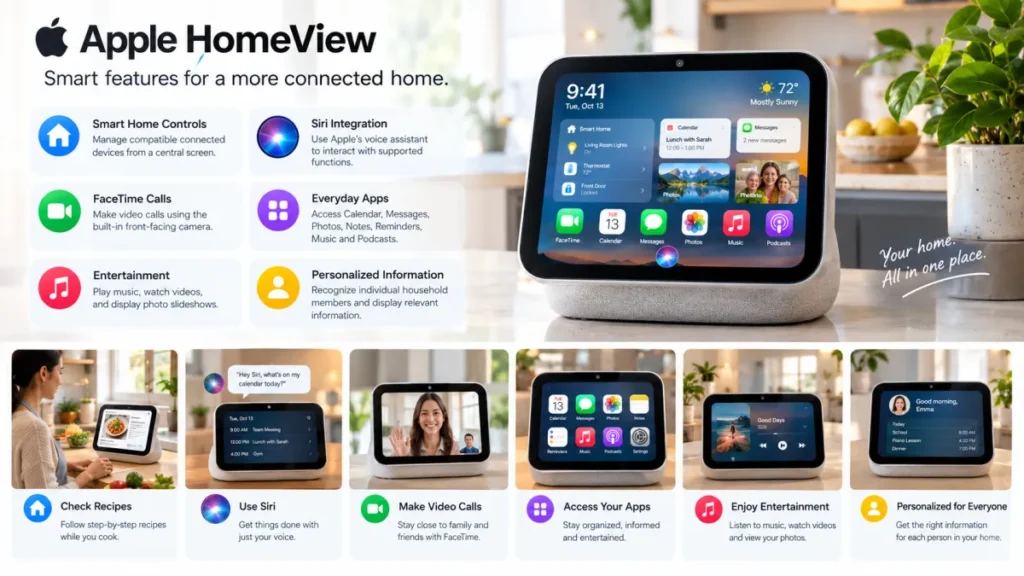
Apple HomeView Features and Expected Benefits
HomeView is designed to make everyday interactions with technology more convenient. Rather than reaching for an iPhone whenever someone wants to check a schedule or control a connected device, users can access several functions directly from the hub.
Its main features include:
- Smart home controls: Manage compatible connected devices from a central screen.
- Siri integration: Use Apple’s voice assistant to interact with supported functions.
- FaceTime calls: Make video calls using the built-in front-facing camera.
- Everyday apps: Access Calendar, Messages, Photos, Notes, Reminders, Music, and Podcasts.
- Entertainment: Play music, watch videos, and display photo slideshows.
- Personalized information: The device can recognize individual household members and display relevant information.
These features could make HomeView particularly practical for families. For example, someone preparing dinner could check a recipe, review upcoming appointments, or make a video call without picking up their phone.
However, the real value will depend on how smoothly these features work together in everyday situations.
How Much Does Apple HomeView Cost?
Apple HomeView has a starting price of $299 in the United States. Preorders opened on October 13, 2026, and the device is scheduled to become available on November 13.
The price places HomeView in a competitive position within the smart display market. Buyers will need to consider whether its combination of home controls, communication features, and Apple software offers enough value compared with less expensive alternatives.
The device comes in four colors: silver, starlight, rose pink, and space gray.
Pricing and availability in other countries may differ, so buyers should check Apple’s local website for regional details.
How Does Apple HomeView Compare With Amazon and Google?
Apple is entering a market where competitors already have established products. Amazon offers its Echo Show smart displays, while Google has its Nest Hub range.
These devices already provide functions such as voice assistance, entertainment, and smart home management. This means Apple cannot rely on its brand name alone to attract customers.
HomeView’s main advantage could be its integration with Apple’s ecosystem. People who already use an iPhone and other Apple devices may appreciate having their calendars, messages, photos, and compatible accessories accessible from a shared household screen.
Amazon and Google, meanwhile, have experience in the smart home market and offer their own connected-device ecosystems.
The best choice will depend on the devices a household already owns, the services its members use, and the reliability of each platform.
Why Has Apple Struggled in the Smart Home Market?
Apple has not achieved the same level of mainstream smart home adoption as some of its competitors. Its HomePod smart speaker and HomeKit platform have offered useful features, but they have not made Apple the obvious choice for every connected household.
One challenge is that smart home products must work reliably across different devices and situations. Consumers want lights, cameras, thermostats, and other accessories to respond consistently without complicated setup or troubleshooting.
Another challenge is competition. Amazon and Google have spent years developing their smart home offerings, giving customers established alternatives.
HomeView could help Apple address these issues by providing a visible, accessible control point for the home. However, a new device alone will not solve every problem. Software quality, accessory compatibility, and long-term support will also matter.
Can Siri Make Apple HomeView Successful?
Siri will play an important role in determining whether HomeView delivers a genuinely useful experience. Voice commands are most valuable when they work naturally, understand requests accurately, and complete tasks without repeated instructions.
Apple’s plans for a more capable Siri experience could make HomeView more helpful for household routines and personalized interactions.
The device is also designed to recognize different people in the home and display relevant information for each individual. This could be useful for families sharing one screen, although privacy controls and dependable recognition will be important.
If Siri struggles with everyday requests or important features arrive later than expected, customers may question whether HomeView offers enough improvement over existing smart displays.
For readers interested in Apple’s latest AI developments, our guide to iOS 27 Siri AI supported devices explains which Apple devices support the new Siri features and what users need to know about compatibility.
Is Apple HomeView Worth Waiting For?
Apple HomeView is worth watching, particularly for households already invested in Apple’s ecosystem. Its touchscreen, built-in communication tools, and centralized smart home controls offer a practical combination of features.
Still, potential buyers should consider their existing devices, budget, and preferred voice assistant before making a decision. People who already own a capable smart display may not need another one unless HomeView offers a meaningful improvement.
Ultimately, Apple’s first major challenge is not simply selling a new piece of hardware. It is convincing people that managing a connected home can be easier and more reliable with its platform.
Final Thoughts
Apple HomeView gives the company another opportunity to compete seriously in the smart home market. Its success will depend on more than its design or integration with other Apple products.
Reliable Siri performance, useful everyday features, broad accessory compatibility, and a fair price will determine whether HomeView becomes a lasting part of people’s homes or remains a niche product. For now, it represents a promising step, but its long-term success will depend on the experience it delivers after launch.
Pingback: Apple TV 4K Gets Siri AI, Hands-Free Voice Commands, and a New Remote