Foldable phones are becoming more practical in 2026, and three of the biggest names are taking noticeably different approaches. The Xiaomi 18 Fold focuses on a wide, tablet-like design and a large battery, Samsung’s Galaxy Z Fold8 emphasizes a lighter body and multitasking, while Google’s Pixel 11 Pro Fold combines a large display with Pixel AI and a versatile camera system.
Here’s what you need to know before choosing between them.
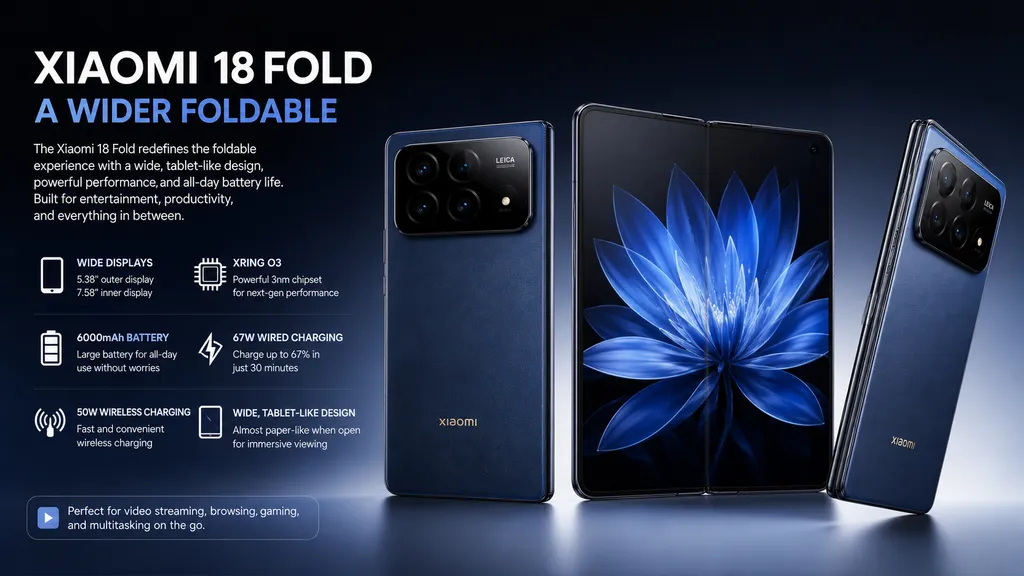
Xiaomi 18 Fold: A Wider Foldable
The Xiaomi 18 Fold uses a 5.38-inch outer display and a 7.58-inch inner screen, giving it a wide, almost paper-like shape when opened. It is powered by Xiaomi’s XRing O3 chipset and packs a large 6,000mAh battery.
Charging is another major feature, with support for up to 67W wired charging and 50W wireless charging. That makes the Xiaomi particularly interesting for people who spend a lot of time watching videos, browsing or multitasking away from a charger.
Galaxy Z Fold8: Built for Everyday Productivity
Samsung’s Galaxy Z Fold8 takes a different approach. It has a 5.5-inch cover display and a 7.6-inch inner screen, both supporting a 120Hz refresh rate. The phone weighs 201g, making it Samsung’s lightest Fold yet.
Inside is the Snapdragon 8 Elite Gen 5 for Galaxy, with 12GB or 16GB of RAM and up to 1TB of storage. Its 4,800mAh battery supports 45W wired charging, while Samsung’s One UI 9 adds multitasking and Galaxy AI features designed around the larger screen.
Pixel 11 Pro Fold: Camera and Google AI
Google’s Pixel 11 Pro Fold stands out with an 8-inch inner display and a 6.5-inch outer screen. It runs on the Tensor G6 chip and comes with 16GB of RAM across its storage configurations.
The camera setup includes a 48MP main camera, 10.5MP ultrawide and 10.8MP 5x telephoto camera. Google also adds Pixel-specific AI features, including HiLight, while the phone has a 4,806mAh typical battery and supports Qi2.2 wireless charging up to 25W.
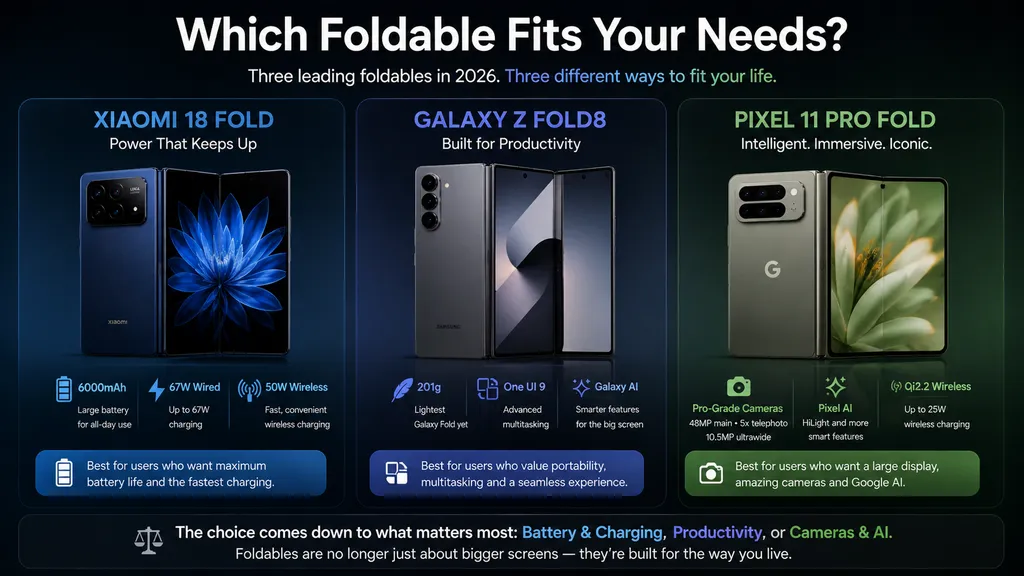
Which Foldable Fits Your Needs?
The biggest difference is how each phone is designed around everyday use. Xiaomi puts more emphasis on battery capacity and fast charging. Samsung focuses heavily on portability, multitasking and its mature foldable software experience. Google combines a large folding display with its camera hardware and Pixel AI features.
You can also check the Xiaomi 18 Fold vs Galaxy Z Fold8 vs Pixel 11 Pro Fold specs and features for a more detailed comparison. Xiaomi 18 Fold vs Galaxy Z Fold8 vs Pixel 11 Pro Fold specs and features.
For buyers, the choice may come down less to screen size and more to what matters most: battery and charging, productivity, or cameras and Google’s software features.
Foldables are no longer simply about having a bigger screen. These three phones show how manufacturers are now trying to make the format useful for different types of users.
Pingback: iPhone Duo Features Android Foldables Could Get in 2027
Pingback: TECNO CAMON Slim 5G: 6.39mm Body, 6,000mAh Battery